
Bathroom staging renovation is the process of preparing and updating a bathroom’s look and function to maximize appeal and value before selling or remodeling. Done right, it sits at the intersection of interior design and real estate strategy. Bathroom renovations average a 60–70% return on investment at resale, making them one of the highest-ROI home improvements you can make. This guide covers everything from budget brackets and tools to 2026 design trends, so you can stage your bathroom with confidence and purpose.
What does a bathroom staging renovation guide actually cover?
A bathroom staging renovation guide covers two distinct activities: renovation and decoration. Renovation means structural changes that require permits and licensed contractors, such as moving plumbing or replacing a subfloor. Decoration means light, non-structural updates like painting, swapping fixtures, and adding fresh linens. For most homeowners staging before a sale, decoration delivers faster impact with far less disruption and cost.
Understanding this distinction saves you money and time. A full remodel is not always necessary to make a bathroom feel fresh and buyer-ready. The goal of staging is to present the space at its best, not to rebuild it from scratch.
Budget brackets for every staging level
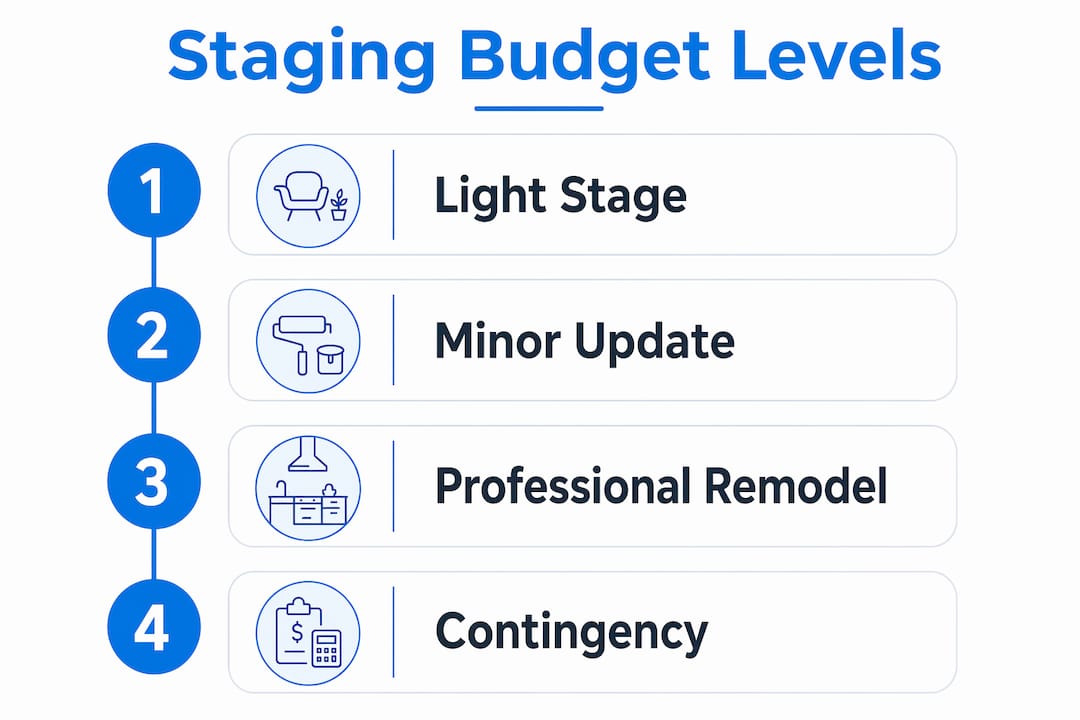
Budget-friendly staging updates start under $2,000, while full-scale professional remodels typically run $10,000–$15,000. That wide range reflects the difference between swapping out a faucet and gutting a bathroom down to the studs. Most homeowners staging for resale land in the middle: a few hundred dollars in paint, hardware, and accessories.
| Staging Level | Estimated Cost | What’s Included |
|---|---|---|
| Light staging | Under $500 | Cleaning, linens, accessories, minor decor |
| Minor updates | $500–$2,000 | Paint, hardware, lighting fixtures, caulking |
| Mid-range remodel | $2,000–$10,000 | Vanity, tile, flooring, plumbing fixtures |
| Full professional remodel | $10,000–$15,000 | Complete gut and rebuild with custom finishes |
Always budget a contingency fund of 10–20% of your total project cost. Hidden issues like rotted subfloors or outdated pipes show up after demolition begins, not before.
Pro Tip: Replacing dated bathroom hardware is one of the most cost-effective moves you can make. A matched set of towel bars, toilet paper holders, and cabinet pulls costs $30–$100 and takes about two hours to install.
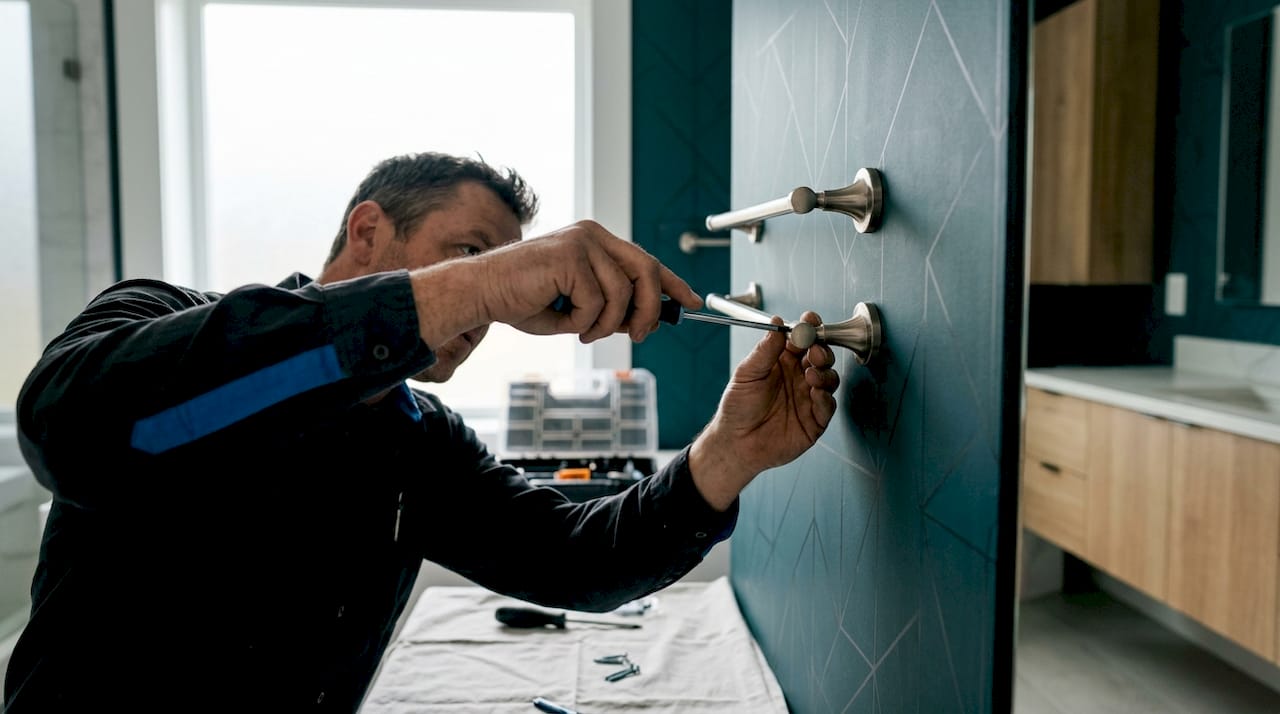
For light staging, your basic toolkit includes a caulk gun, grout cleaner, painter’s tape, a screwdriver set, and a putty knife. None of these require professional experience to use. The materials that matter most are moisture-resistant paint, fresh caulk, and new hardware.
How to stage your bathroom step by step
Staging a bathroom follows a clear sequence. Skipping steps, especially early ones, undermines the results of everything that comes after.
-
Declutter completely. Remove all personal items: medications, razors, shampoo bottles, and anything stored on the counter. Buyers need to picture themselves in the space, not you. Rent a small storage unit if needed.
-
Deep clean every surface. Scrub grout lines with a stiff brush and a grout cleaner. Re-caulk around the tub, shower, and sink if the existing caulk is cracked or discolored. A clean bathroom reads as a well-maintained bathroom.
-
Paint with the right product. Moisture-resistant paint is mandatory for bathrooms. Standard interior paint bubbles and peels within 12 months in a humid environment. Choose a neutral, warm white or soft greige to appeal to the widest range of buyers.
-
Update lighting. LED bulbs and layered lighting make a bathroom feel cleaner and more spacious instantly. Replace a single overhead fixture with a vanity bar light and add a dimmer if the wiring allows. Good lighting is the single most underrated staging tool in any bathroom.
-
Swap hardware and fixtures. Replace the faucet, towel bars, and cabinet pulls as a matched set. Brushed nickel and brushed brass both read as current and clean. Mismatched hardware signals neglect, even in an otherwise tidy bathroom.
-
Add fresh linens and minimal decor. Hang two or three white towels, folded neatly, and place a small plant or a single candle on the counter. Create a “no-touch” zone with fresh, unused white towels reserved strictly for showings. This keeps the space looking pristine without daily effort.
-
Check ventilation and storage. A bathroom that smells musty or has no visible storage will lose buyers fast. Clean the exhaust fan cover, add a small basket under the sink, and use a simple over-the-door organizer if cabinet space is tight.
Pro Tip: Functionality beats aesthetics every time. Fix the dripping faucet, the sticky drawer, and the flickering light before you spend a dollar on decor. Buyers notice what doesn’t work far more than what looks good.
You can see how professional bathroom remodeling combines these steps with expert-level execution when the scope goes beyond light staging.
What staging mistakes cost homeowners the most?
The most common staging mistakes are predictable, and most are avoidable with a simple checklist approach.
-
Over-personalizing the space. Family photos, bold accent colors, and novelty soap dispensers make the bathroom feel like yours, not theirs. Neutral is not boring. Neutral is a blank canvas buyers can project onto.
-
Ignoring functional problems. A slow drain, a running toilet, or a broken exhaust fan signals deferred maintenance to every buyer who walks in. Fix functional issues before staging anything decorative.
-
Using the wrong paint. Standard interior paint in a bathroom is a ticking clock. Moisture-resistant or mildew-resistant paint prevents the bubbling and peeling that makes a freshly painted bathroom look worse than an unpainted one within a year.
-
Choosing overly trendy finishes. A finish that feels cutting-edge today can feel dated in three years. Stick to finishes with staying power: brushed nickel, brushed brass, and matte white all have long design cycles.
-
Skipping the contingency fund. Homeowners who budget exactly what they plan to spend almost always go over. Budget 10–20% above your estimate to absorb surprises without derailing the project.
-
Overdoing the decor. Three accessories are enough. A plant, a candle, and a soap dispenser. Every additional item adds visual noise and shrinks the perceived size of the room.
The underlying principle is restraint. Staging is about removing barriers to a buyer’s imagination, not filling the space with your own.
Which bathroom design trends work best for staging in 2026?
2026 design trends are shifting away from all-white bathrooms toward warm minimalism. Natural stone, curved mirrors, and brushed brass fixtures are replacing the clinical white-and-matte-black combinations that dominated the previous decade. This shift matters for staging because buyers respond to what feels current, not what felt current five years ago.
| Design Element | Dated Approach | 2026 Approach |
|---|---|---|
| Color palette | All-white, cool gray | Warm white, soft greige, warm beige |
| Fixtures | Matte black, chrome | Brushed brass, brushed nickel |
| Mirrors | Hard rectangular frames | Curved or arched frames |
| Tile | Subway tile in standard layout | Statement floor tile, zellige, or textured tile |
| Storage | Open shelving, cluttered | Closed cabinetry, hidden storage |
Warm minimalism works well for staging because it feels both current and timeless. It reads as designed without feeling overdone. You can achieve this look without a full remodel: swap a rectangular mirror for an arched one, replace chrome faucets with brushed brass, and paint the walls a warm white instead of a cool white.
Smart storage features, like pull-out organizers and built-in niches, add perceived value without major construction. Buyers in 2026 prioritize function alongside aesthetics. A bathroom that looks good and works well commands more attention than one that only does one of those things.
Browse the completed renovation gallery from Myreadyrenovation to see how these trends translate into real finished spaces.
Key Takeaways
A staged bathroom that combines functional fixes, neutral finishes, and current design details consistently outperforms one that relies on decor alone.
| Point | Details |
|---|---|
| Know your scope | Distinguish decoration from renovation before spending a dollar. |
| Budget with a buffer | Add 10–20% above your estimate to cover hidden structural issues. |
| Fix function first | Repair drips, drains, and lighting before adding any staging decor. |
| Use moisture-resistant paint | Standard interior paint fails in bathrooms within 12 months. |
| Follow 2026 trends carefully | Warm minimalism and brushed brass have longer design cycles than trendy finishes. |
What I’ve learned about staging versus renovating bathrooms
The question I hear most often is: “Do I need to renovate, or can I just stage it?” My honest answer is that most homeowners renovate when they should be decorating, and they decorate when they actually need to renovate.
Here is the clearest way I know to separate the two. If the bathroom has a functional problem, you need renovation. If it has an aesthetic problem, you need staging. A dripping faucet, a cracked subfloor, or a ventilation fan that stopped working three years ago are renovation problems. A dated color scheme, mismatched hardware, and a cluttered counter are staging problems.
The mistake I see most often is homeowners spending $800 on new towels, a mirror, and a plant while ignoring a slow drain and a light fixture that flickers. Buyers notice the drain. They do not notice the plant.
The second mistake is over-investing in staging for a bathroom that genuinely needs structural work. No amount of fresh linens fixes a bathroom with visible water damage or a toilet that rocks. In those cases, the staging conversation has to wait until the renovation conversation is finished.
Functionality is the foundation. Staging is the finish coat. Get the order right, and the results take care of themselves.
— Eric
Myreadyrenovation’s bathroom remodeling services
When staging reveals that your bathroom needs more than a coat of paint and new hardware, professional remodeling is the right call.
Myreadyrenovation specializes in bathroom remodeling in Fraser, MI, with a focus on custom cabinetry, fixture upgrades, and efficient layouts that improve both aesthetics and function. The team handles projects from targeted updates to full gut remodels, and every project starts with a free estimate. If you are preparing to sell or simply want a bathroom that works as well as it looks, reach out to Myreadyrenovation to discuss what your space actually needs.
FAQ
What is bathroom staging renovation?
Bathroom staging renovation is the process of updating a bathroom’s appearance and function to maximize appeal before selling or remodeling. It combines light decoration, functional repairs, and design updates to make the space buyer-ready.
How much does it cost to stage a bathroom?
Light staging costs under $500, while minor updates including paint, hardware, and lighting run $500–$2,000. Full professional remodels range from $10,000–$15,000, depending on scope and materials.
Do I need a contractor to stage a bathroom?
Most staging tasks, including painting, hardware replacement, and decor updates, are DIY-friendly and require no permits. A licensed contractor becomes necessary when the project involves plumbing, electrical work, or structural repairs.
What paint should I use in a bathroom?
Moisture-resistant or mildew-resistant paint is the correct choice for any bathroom. Standard interior paint bubbles and peels within 12 months in a humid environment, which defeats the purpose of staging.
What are the best 2026 bathroom design trends for staging?
Warm minimalism is the strongest staging choice in 2026, featuring warm white walls, brushed brass or brushed nickel fixtures, curved mirrors, and statement floor tile. These elements feel current without being so trendy that they date quickly.