
There are multiple benefits when upgrading to in-floor radiant heating when renovating your bathroom. Radiant floor heating is defined as an in-floor system that delivers warmth directly from the floor surface upward, replacing cold tile with even, silent heat throughout your bathroom. The role of heated floor bathroom renovation projects play is significant: these systems are 25–40% more energy-efficient than traditional forced-air heating by eliminating duct losses entirely. Homes with radiant bathroom heating also sell 6–8% faster than comparable properties without it. Two main system types exist: electric mat systems and hydronic (water-based) systems. Both are installed beneath tile or stone and controlled by a programmable thermostat. Understanding which system fits your renovation, and when to install it, determines whether you get maximum comfort at a reasonable cost or pay a steep premium for a retrofit later.
How do heated floor systems improve comfort and energy efficiency?
Radiant floor heating works by warming the floor surface itself, which then radiates heat upward into the room. This is fundamentally different from forced-air systems, which push heated air through ducts and vents. Forced-air systems lose a significant portion of their energy through duct leakage and uneven distribution. Radiant systems eliminate that waste entirely.
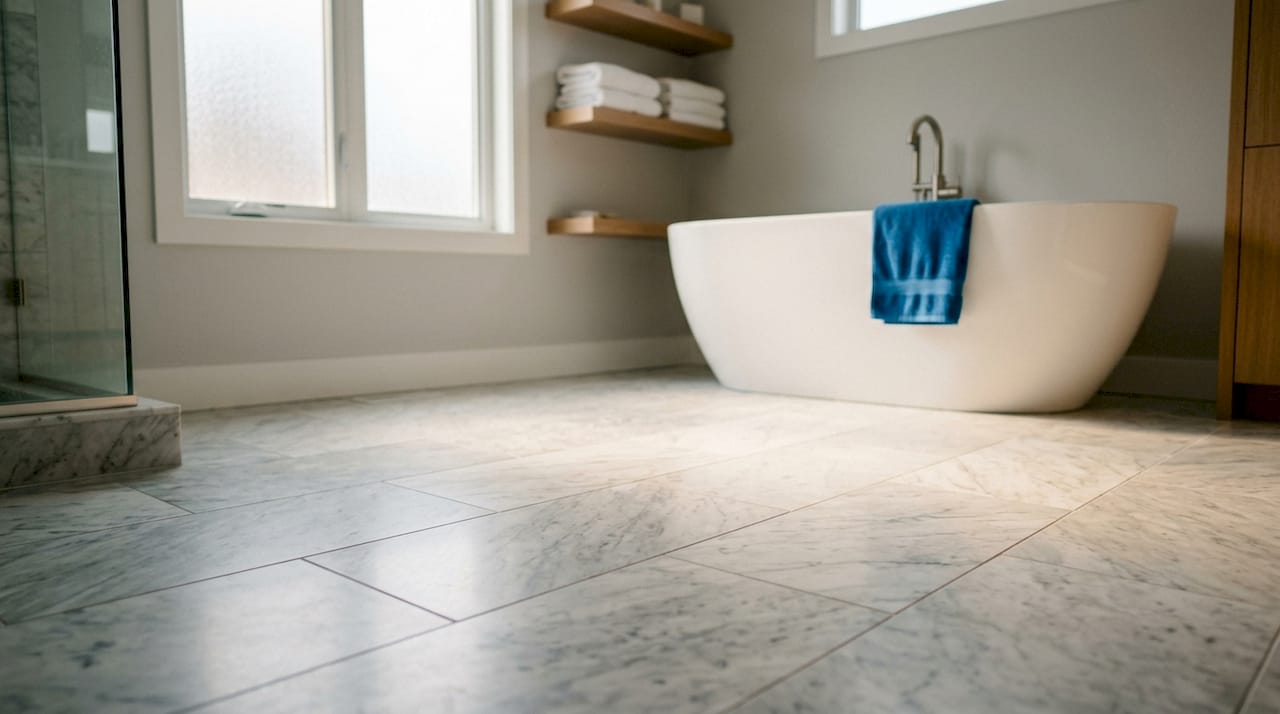
The result is uniform warmth at floor level, which is exactly where you feel cold in a bathroom. Tile and natural stone are the worst offenders for cold floors. Both materials conduct heat away from bare feet almost instantly. A radiant system underneath those materials turns a cold-morning discomfort into a genuinely pleasant experience.
The energy efficiency advantage of 25–40% over forced air is not a marginal gain. That difference compounds over years of daily use, particularly in bathrooms where heating runs every morning. Electric radiant systems also warm up in 20–40 minutes and carry lifespans exceeding 25 years with no moving parts and no maintenance requirements.
The health benefits are real and often overlooked. Forced-air systems circulate dust, allergens, and pet dander through ductwork every time they run. Radiant systems eliminate duct-based dust circulation entirely. That makes them the better choice for households with allergy sufferers, children, or pets.
Key comfort advantages of radiant floor heating in bathrooms:
- Even warmth: No cold spots, no hot blasts from vents, just consistent floor-level heat
- Silent operation: No fan noise, no duct rattling, no cycling sounds
- Dust-free air: No allergen circulation from ductwork
- Cold material fix: Transforms tile and stone from cold to comfortable
- Programmable control: Set it to warm up before your alarm goes off
Pro Tip: Treat your heated floor as a room temperature management tool, not your sole heat source. Pair it with your existing bathroom heating for the best comfort and the most efficient energy use.
What are the best practices for installing heated floors during a bathroom renovation?
Timing is the single most important factor in a heated floor installation. Installing during a gut renovation, when the subfloor is already exposed, costs a fraction of what a standalone retrofit costs later. Retrofitting after tiles are set can cost 3–4 times more because every tile must be removed, the system installed, and the floor relaid from scratch.
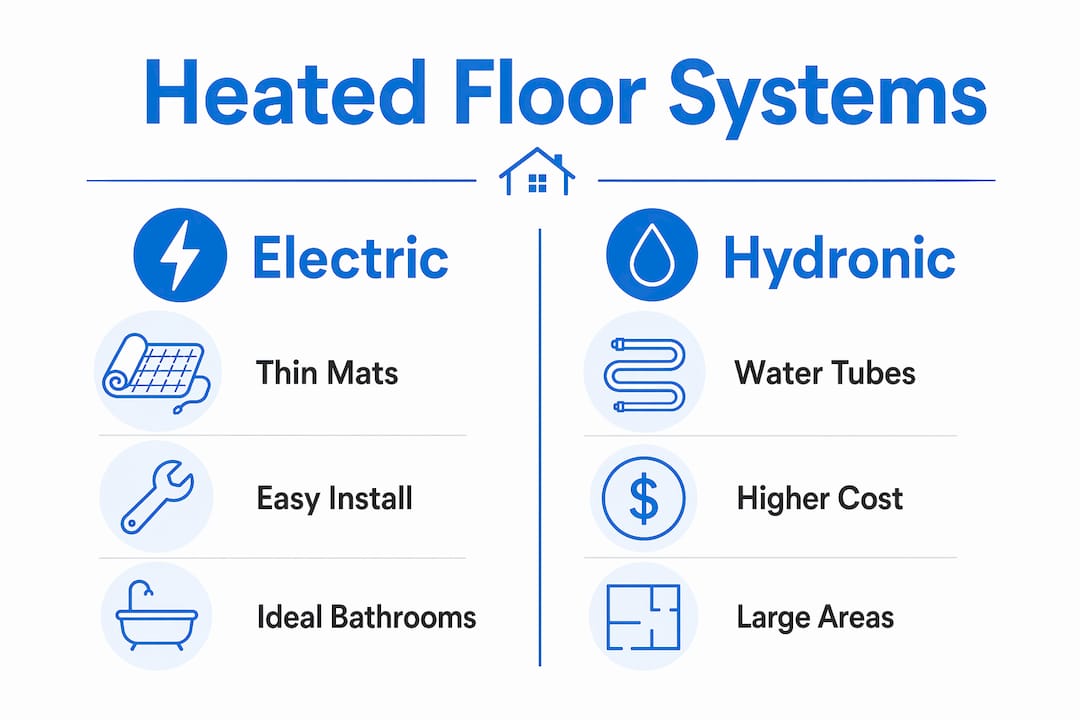
Electric vs. hydronic systems
Electric systems use thin heating mats or cables installed directly beneath the tile layer. They are the standard choice for bathroom renovations because they are thin, easy to install in small spaces, and connect to your existing electrical panel. Hydronic systems circulate hot water through tubing beneath the floor. They cost more to install but cost less to run over time in large spaces. For most bathrooms, electric systems are the practical and cost-effective choice.
Installation steps that protect your investment
Follow these steps to get a system that lasts and stays under warranty:
- Plan the layout before ordering materials. Measure the heated area carefully, excluding space under cabinets and the toilet. Heating mats should never go under fixed fixtures.
- Install a backup floor temperature sensor. A backup sensor installed during initial work provides a maintenance contingency. Replacing a failed sensor beneath set tile is expensive and disruptive.
- Document everything before tiling. Photograph the mat layout, sensor positions, and take resistance readings before any tile goes down. This documentation preserves your system warranty and makes future troubleshooting possible without tearing up the floor.
- Use a licensed electrician for all connections. Heated floor systems connect to your home’s electrical panel. This work requires a licensed professional in most jurisdictions. Do not cut corners here.
- Test the system before tiling. Run the system and confirm it heats evenly before any tile adhesive goes down. Fixing a wiring problem after tiling means starting over.
- Allow proper curing time. Tile adhesive and grout must cure fully before the system runs at full power. Follow the manufacturer’s curing schedule exactly.
Pro Tip: Plan your heated floor layout at the very start of your bathroom renovation, not as an afterthought. Changing the plan after tile work begins means costly rework. Early planning costs nothing.
How much does heated floor installation cost during a bathroom renovation?
The cost difference between installing during a renovation versus retrofitting afterward is dramatic. During a planned bathroom renovation, the incremental cost of adding electric radiant flooring runs from $800 to $4,000 depending on room size and system complexity. That range covers the heating mat, thermostat, sensor, and labor to install before tiling.
A standalone retrofit on an already-finished bathroom costs between $2,800 and $5,500. That higher figure reflects the cost of removing existing tile, installing the system, and relaying the entire floor. The tile itself may not survive removal intact, adding material costs on top.
Room size and location both affect cost. A small master bath runs toward the lower end of the renovation range. A large primary ensuite with complex tile patterns runs higher. The long-term energy savings from a 25–40% reduction in heating costs offset the upfront investment over time, particularly in colder climates where bathroom heating runs daily for months.
| Scenario | Typical Cost Range | Key Cost Driver |
|---|---|---|
| During planned renovation | $800–$4,000 | Mat, thermostat, labor before tiling |
| Standalone retrofit | $2,800–$5,500 | Tile removal, reinstallation, labor |
| Energy savings vs. forced air | 25–40% reduction | Eliminated duct losses, efficient distribution |
| System lifespan | 25+ years | No moving parts, no maintenance |
The math is straightforward. Installing during your renovation costs less upfront, avoids tile demolition, and starts delivering energy savings immediately. Waiting until later multiplies the cost without adding any comfort benefit.
When are heated floors most worth it in a bathroom renovation?
Heated floors deliver the best return in bathrooms used daily by the household’s primary occupants. Master baths and primary ensuites are the ideal application. These rooms see heavy morning use, often have large tile or stone floors, and benefit most from the comfort upgrade. The best use case is a frequently used bathroom where the system runs every day and the comfort benefit is felt consistently.
Spaces where heated floors are worth the investment:
- Master bathrooms and primary ensuites: Daily use maximizes comfort return and energy savings
- Children’s bathrooms: Cold floors are a real deterrent for kids; heated floors make morning routines easier
- Bathrooms with large tile or stone floors: These materials are the coldest underfoot and benefit most from radiant heat
- Bathrooms in cold climates: The longer the heating season, the faster the energy savings offset the installation cost
Spaces where the cost-benefit ratio is weaker:
- Powder rooms: Infrequent use means the system rarely runs. The comfort gain does not justify the cost.
- Guest bathrooms used only occasionally: Same logic applies. A room used a few times a month does not need a heated floor.
One practical nuance that surprises many homeowners: heated floors warm the floor and the room, but they do not dry towels. Towel rails remain necessary for damp towel management. Relying on the floor system alone leaves towels damp and creates moisture problems. Pair your heated floor with a towel rail for a complete bathroom heating setup.
Key Takeaways
Heated floors installed during a bathroom renovation deliver the best combination of comfort, energy savings, and cost control compared to any other bathroom heating option.
| Point | Details |
|---|---|
| Install during renovation | Adding heated floors during a gut remodel costs $800–$4,000 vs. $2,800–$5,500 for a retrofit. |
| Energy efficiency gain | Radiant systems are 25–40% more efficient than forced-air heating by eliminating duct losses. |
| Document and use backup sensors | Photograph layouts and install a backup sensor before tiling to protect your warranty. |
| Best rooms for heated floors | Master baths and primary ensuites deliver the highest comfort return on daily use. |
| Pair with towel rails | Heated floors warm the room but do not dry towels; towel rails remain a necessary addition. |
What I’ve learned after watching homeowners skip this upgrade
The most common regret I hear from homeowners after a bathroom renovation is not skipping the tile upgrade or the custom vanity. It is skipping the heated floor. Every single time, the reason is the same: they decided to add it later. Later never comes cheap.
When the subfloor is open during a gut renovation, adding a heating mat takes a few hours and a fraction of the total project budget. The moment that floor is tiled, the calculus changes completely. You are now looking at demolition, disposal, new tile, new adhesive, new grout, and all the labor that goes with it. I have seen homeowners spend more on a retrofit than they saved by skipping it the first time.
The other thing I want homeowners to understand is that a heated floor is not a luxury item in the same category as a rainfall showerhead. It is a functional upgrade that changes how you experience your bathroom every single morning. Cold tile is a daily friction point. Warm tile is not something you notice after a week. You just stop dreading getting out of the shower.
Professional installation and thorough documentation matter more than most homeowners realize. A heating mat buried under tile with no photos, no resistance readings, and no backup sensor is a liability. If something goes wrong five years later, you have no warranty and no way to diagnose the problem without tearing up the floor. The documentation step costs nothing and protects everything.
My honest recommendation: if you are doing any bathroom renovation that exposes the subfloor, add the heated floor. The bathroom remodeling process is the right time to do it. Do not talk yourself out of it to save a few hundred dollars on a project that already costs thousands.
— Eric
Myreadyrenovation’s approach to heated floor bathroom remodels
Myreadyrenovation specializes in bathroom remodeling in Fraser, MI, and heated floor integration is part of how the team approaches full bathroom renovations from the start.
When Myreadyrenovation plans a bathroom remodel, heated floor installation is considered at the design stage, not added as an afterthought. That timing is what keeps costs in the $800–$4,000 range instead of the retrofit range. The team handles layout planning, licensed electrical connections, sensor installation, and full documentation before any tile goes down. You can view completed bathroom renovation projects in the gallery to see the quality of finished work. To get a free estimate for your bathroom remodel with heated floor integration, visit Myreadyrenovation and request a consultation.
FAQ
What is the role of heated floors in a bathroom renovation?
Heated floors provide even, silent, and energy-efficient warmth from the floor surface upward, replacing cold tile with consistent comfort. They also improve energy efficiency by 25–40% compared to forced-air systems.
Are heated floors worth it in a bathroom?
Heated floors are worth it in master baths and primary ensuites used daily. They deliver long-term energy savings, improve comfort significantly, and help homes sell faster.
How much does it cost to add heated floors during a bathroom renovation?
Adding electric radiant flooring during a planned renovation costs $800–$4,000. Waiting and retrofitting after tile is set raises that cost to $2,800–$5,500 due to tile removal and reinstallation.
What type of heated floor system is best for bathrooms?
Electric radiant mat systems are the standard choice for bathrooms. They are thin, easy to install beneath tile, connect to your existing electrical panel, and carry warranties of 25 years or more.
Do heated bathroom floors replace towel rails?
Heated floors warm the floor and the room but do not dry towels. Towel rails remain necessary for managing damp towels and preventing moisture buildup in the bathroom.